
A Better Fit
Osseointegration Clinical Research Lab and Veterans Affairs
By: Meghan Bubel, MBA ’23
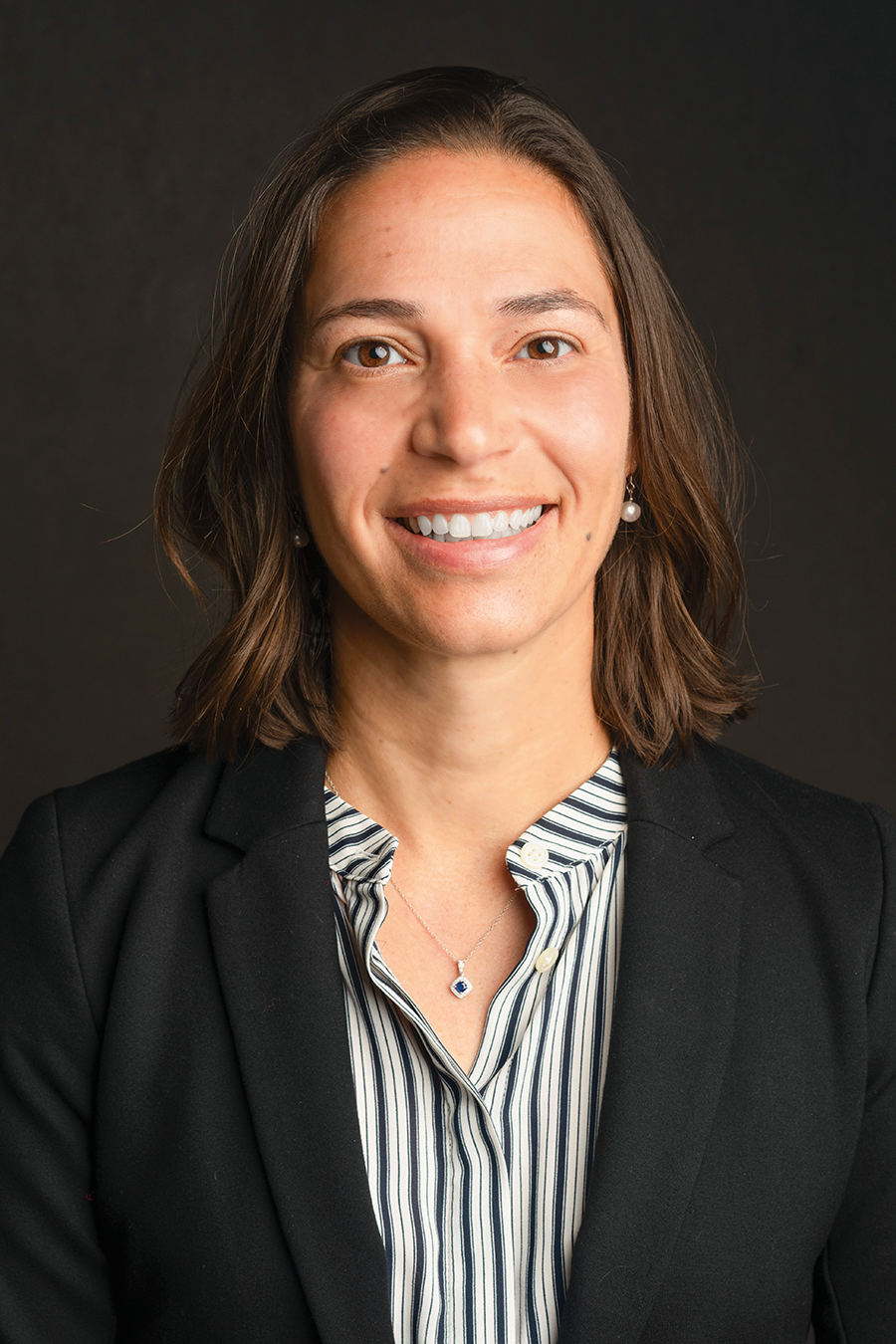
Sarina Sinclair, PhD
National Study Chair for the multi-center Veterans Affairs– funded trial and assistant professor of orthopedics at the Spencer Fox Eccles School of Medicine
For over two decades researchers at the University of Utah have patented and advanced osseointegration technologies that allow prosthetics to be attached directly to bone by an implanted stem and post through the skin—a transformative innovation that is now entering FDA-approved national clinical trials. Sarina Sinclair, PhD, National Study Chair for the multi-center Veterans Affairs–funded trial and assistant professor of orthopedics at the Spencer Fox Eccles School of Medicine, shares why this technology marks a breakthrough in prosthetic care.
Why is osseointegration such a breakthrough compared to socket prosthetics?
Osseointegration simply refers to bone integrating with something, and in our case, that’s the titanium stem inserted into the patient’s femur. A post is then attached so that it extends through the skin, and a connector attaches the implant to the external prosthetic limb. With traditional socket prosthetics, the prosthetic fits over soft tissue, which shifts constantly depending on things like sweat, weight changes, or even hydration levels. That often causes skin breakdown and overall discomfort.
Since the prosthetic connects directly to the skeletal system, we’ve already seen evidence that loading the bone through osseointegration doesn’t just benefit the amputated limb: it may also improve bone health in the spine and hips. By putting natural forces back through the skeleton, we allow our patients to move their skeletal systems in ways similar to how they moved before the amputation.
What makes the U’s prosthetic unique is the distal collar and the coating that surrounds the end of the titanium device and the collar. This combination allows the bone to securely attach to the prosthetic device. The length of the implant was also designed to be bone sparing. Our patients shouldn’t lose bone length if the device has to be removed for any reason.
What challenges does your research aim to overcome for patients?
The biggest issues for traditional socket users are pain, skin issues, poor fit, and the mental toll of constant adjustments. With osseointegration, putting their limb on is as simple as clicking the prosthetic into place. Patients aren’t mentally budgeting energy or time to deal with a frustrating fit. Even something as basic as sitting becomes more comfortable. One of our first patients said using the restroom would finally be easier—something most of us take for granted.
What keeps you motivated in this research? What’s the “why” that drives you every day?
It’s the patients and seeing the impact that the research makes on their lives and their families. When you see a patient stand up for the first time after surgery and start walking or stop using chronic pain medications, you just know that’s why you do this work.
Ultimately, our goal is simple: give amputees greater comfort, function, and quality of life. If we can do that—and reduce the daily frustrations that come with sockets—then all of this work will have been worth it.
Who’s in charge?
Sarina Sinclair, PhD National Study Chair for the multi-center Veterans Affairs–funded trial and assistant professor of orthopedics at the Spencer Fox Eccles School of Medicine
On the breakthrough in osseointegration technology: