
Driving Momentum
A. Lorris Betz Executive Vice President for Health Sciences and CEO of University of Utah Health Bob Carter, MD, PhD, discusses stepping into his new role and what’s on the horizon for U of U Health and the Spencer Fox Eccles School of Medicine.
By: Autumn Thatcher
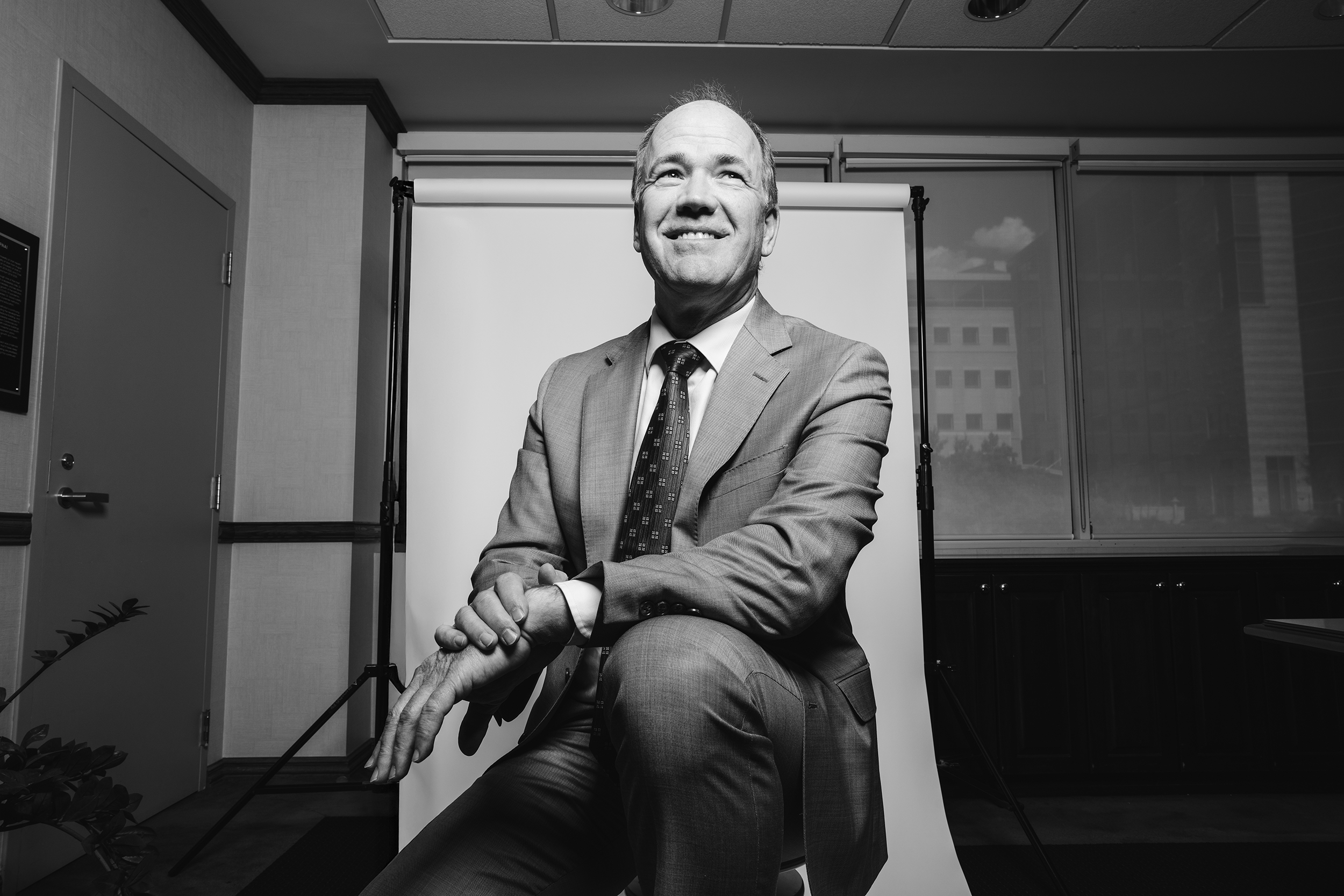
Bob Carter has always aimed high. A former pole vaulter, he had no choice but to be prepared to take off, gain speed, and carry the momentum forward to firmly plant his pole and hurl his body as high as it would possibly go. When he landed, there was always an opportunity to look up and back, to reflect on how he did and strategize on how he could improve on the next vault. Carter has carried this drive to move forward beyond the pole-vaulting days of his youth into a future of leadership in medicine.
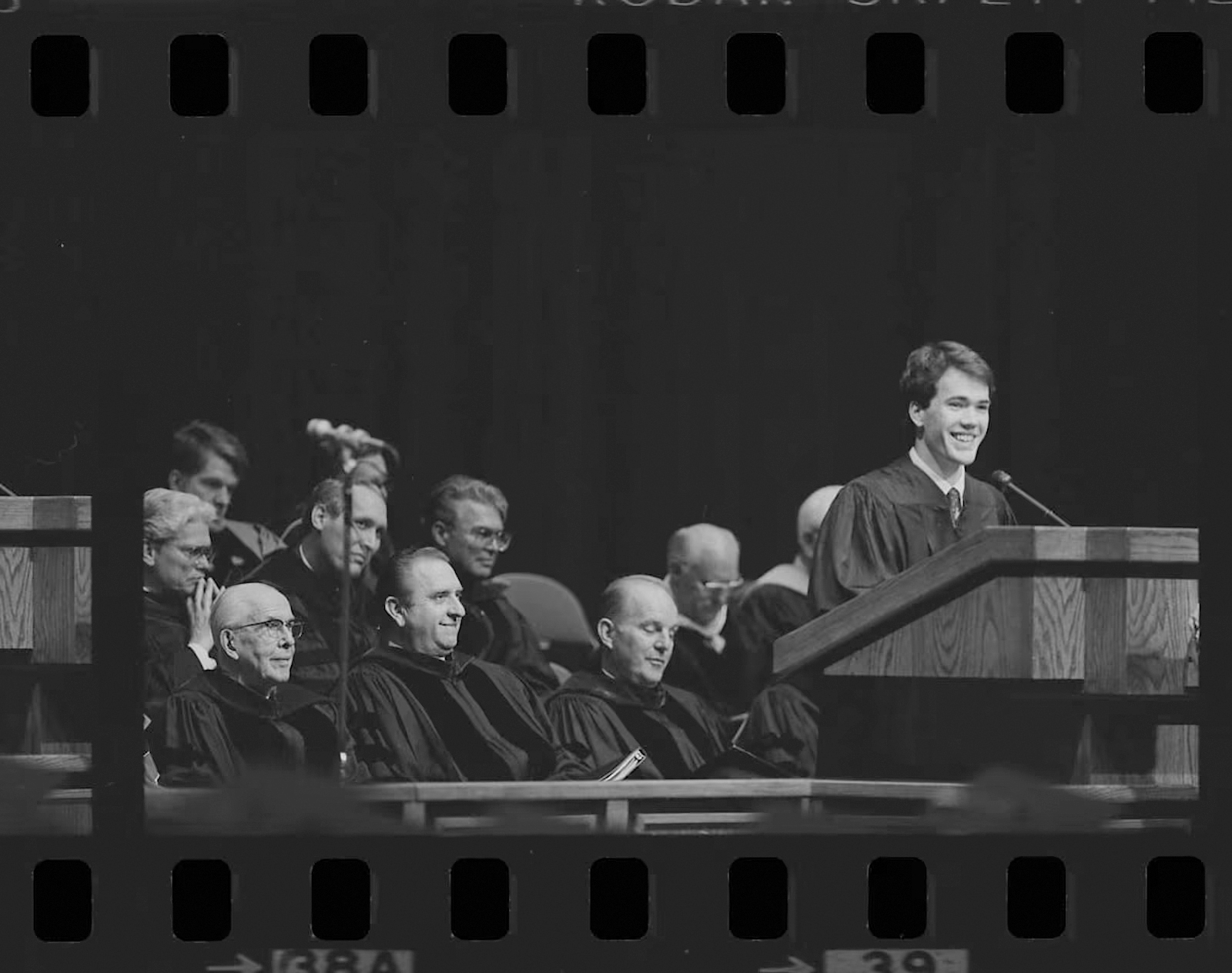
A young Bob Carter addresses the Class of 1986 at BYU.
“I have always tried to stay pretty well-rounded,” Carter says. “My parents emphasized that, and it set the stage for different opportunities.”
A nationally renowned neurosurgeon, Carter has led NIH-funded research at both the UC San Diego School of Medicine and Harvard Medical School. Over the course of his career, he has made ground-breaking discoveries in detecting and treating the most aggressive type of brain cancer and continues to be committed to creating new therapies for cancer and other brain disorders.
In February 2025, Carter reached the next milestone on his path by becoming the executive vice president for health sciences and CEO of University of Utah Health. In October of that same year, Carter was inducted into the National Academy of Medicine—considered one of the highest honors in the fields of health and medicine—which recognizes individuals who have demonstrated out-standing professional achievement and commitment to service.
One year into his role, Carter reflects on what he has learned so far and dives into what’s ahead.
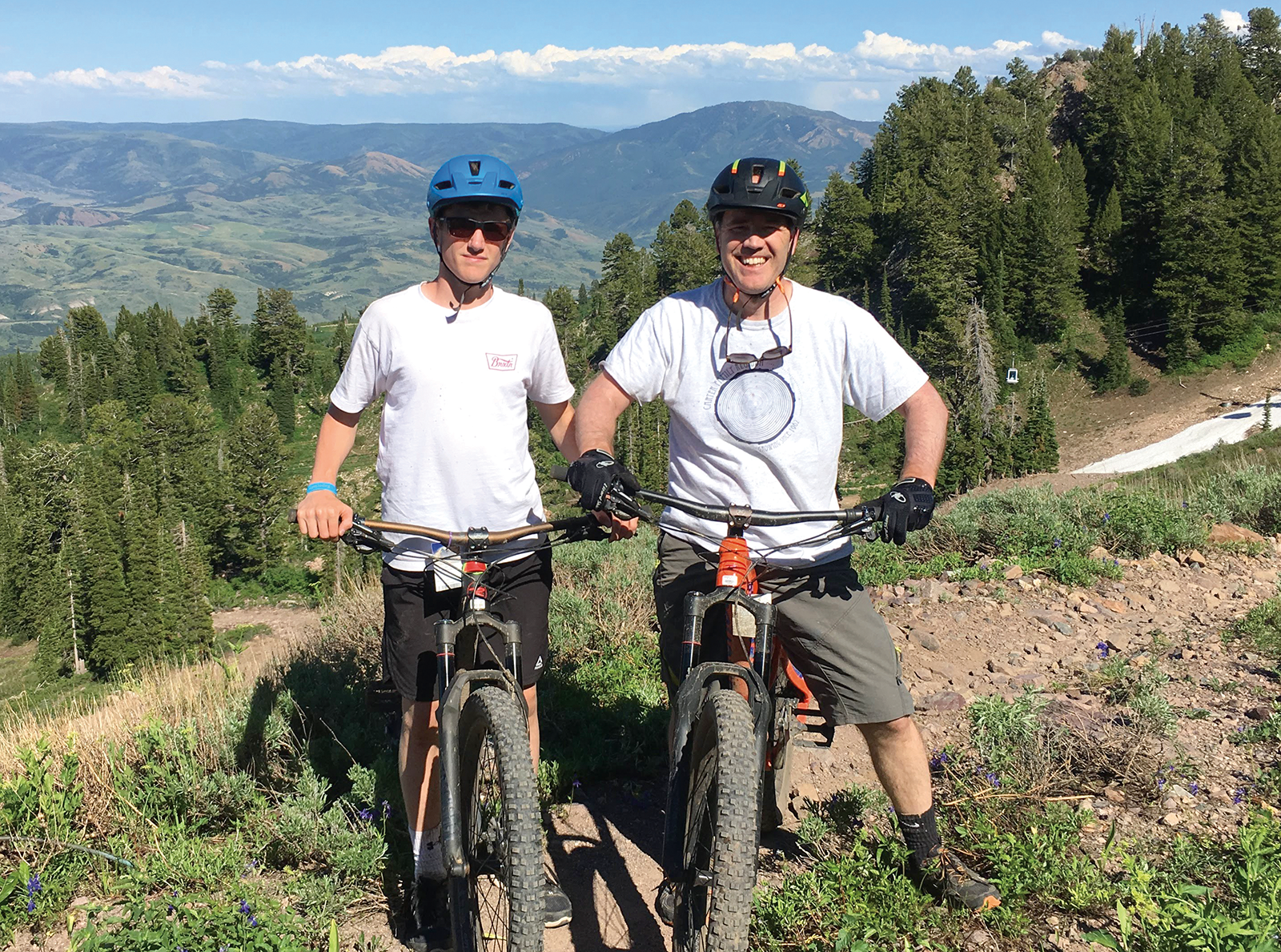
Bob Carter, MD, PhD, takes to Utah’s trails.
RETURNING TO UTAH
I was born in Utah, but my parents moved to Ohio a few years later, and that’s where I graduated high school. However, I visited Utah while growing up and attended Brigham Young University to study chemistry, so I was excited about the opportunity to return to the state.
When you make a big move like this, you do a lot of vetting and evaluating. You try to get a sense of the organization. But there’s always a certain unknown, which is, “Is it actually what I thought it was going to be?” In my case, I’ve been more than delighted to get not only the confirmation of what I had hoped for in terms of the community, but also an exposure to a lot of things that make me even more impressed by the depth and breadth of expertise, commitment, and desire to meet the moment. There’s an aspiration to be better, to do more: to create and innovate in ways that make you feel like this faculty and staff want something more not only for this campus and our university, but also our larger community. That’s very important. We have the motivation of the team and the people, which means we have a great foundation to build on.
ACTING IN THE MOMENT WHILE VISIONING FOR THE FUTURE
Three days before I started, the federal government made its first announcement that it would reduce the indirect rates of financial support on the federal grants from 54% to 15%, which was projected to create a $50 million budget hole. In that moment, I saw our teams immediately rally to bring better communication to our legislative leaders and supporters about why the grants and the research that we were doing are important. There’s a certain uncertainty about the future that makes it hard to plan, but one of the things I wanted to do right off the bat, and I think we’ve made quite a bit of progress on it, is to bring our community of high-performing entities—each with a vision—together and think about more powerful ways to work together as a health care system.
There’s an aspiration to be better, to do more: to create and innovate in ways that make you feel like this faculty and staff want something more not only for this campus and our university, but also our larger community.
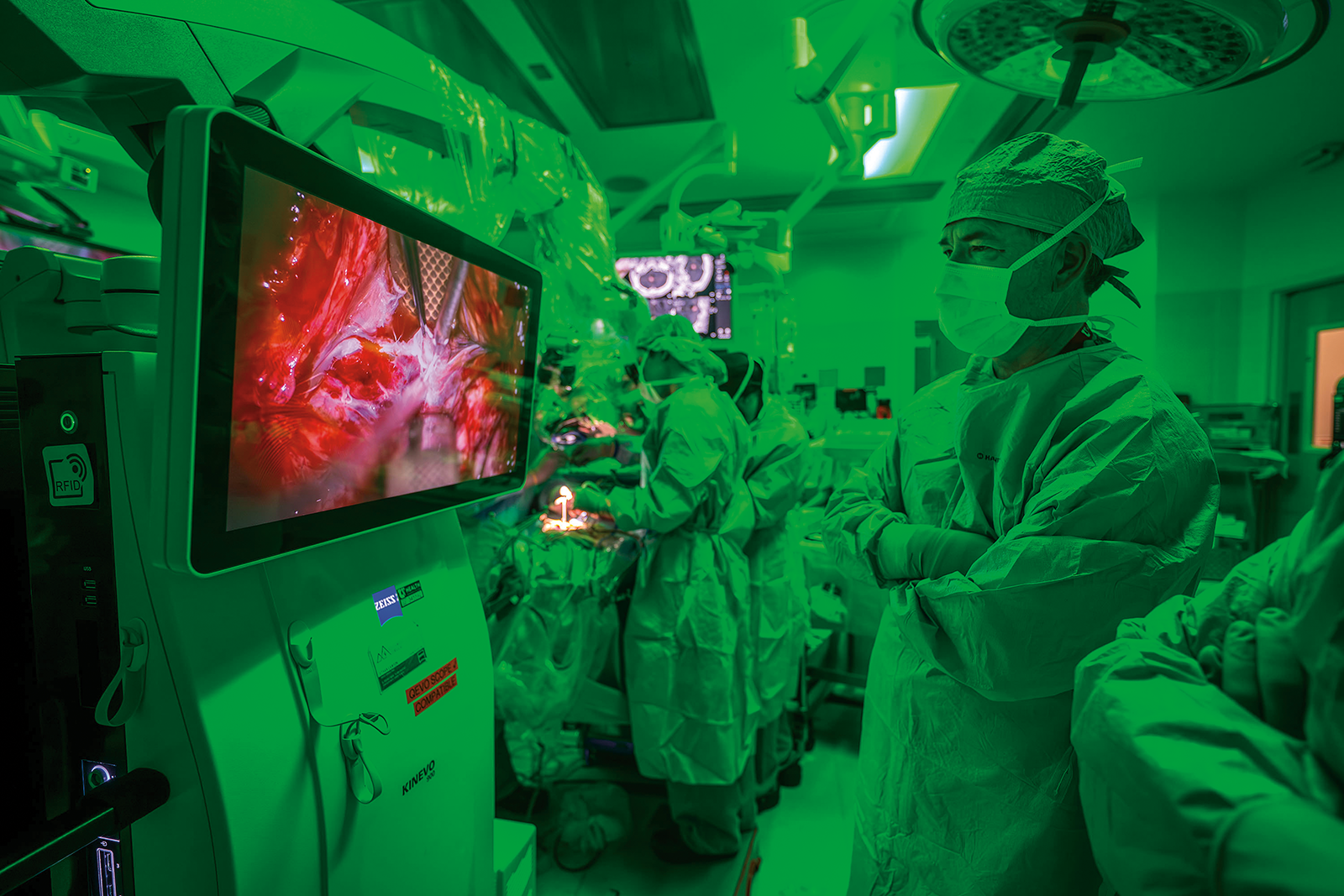
Bob Carter, MD, PhD, works with his surgical team to remove a brain tumor from a patient in Salt Lake City.
EXPANDING COMMUNITY REACH
I’ve learned that Utah communities aspire to always be better and improve. This includes improving access to better health. One of the first things that I got to do after arriving at the U was join President Randall for a lunch meeting with Westside Community United, a committee of residents that has helped inform our work. It was very clear that there is a great desire to see the University of Utah—particularly in relation to the University of Utah Eccles Health Campus and Eccles Hospital in West Valley—be present and deliver on the service component of our broad university mission. Later that summer, I toured the southern part of the state to connect with legislators and community members. The message in that region was the same as what I heard in West Valley City: citizens want to see the University of Utah have more of an impact in their communities. They want to see the impact of the university and the health care system. There’s a significant desire for a high quality of life in Utah: to be able to partake of the natural beauty of the state and prioritize human wellness and health.
ELEVATING MEDICAL EDUCATION IN THE SPENCER FOX ECCLES SCHOOL OF MEDICINE
Two-thirds of the physicians practicing in this state trained at the University of Utah at one point in their careers. That’s something we can always look to with pride. At the same time, medical education in the state is evolving: we’ll soon have four different medical schools in Utah. How does the university position itself for that future? I am particularly excited about the new Spencer Fox Eccles School of Medicine building and facility opening this summer. It will offer state-of-the-art training opportunities for new medical students and students across the health sciences through virtual training, simulation training, and experiential training. We are searching for our next dean, continuing to evolve our own curriculum, and expanding our medical school class size.
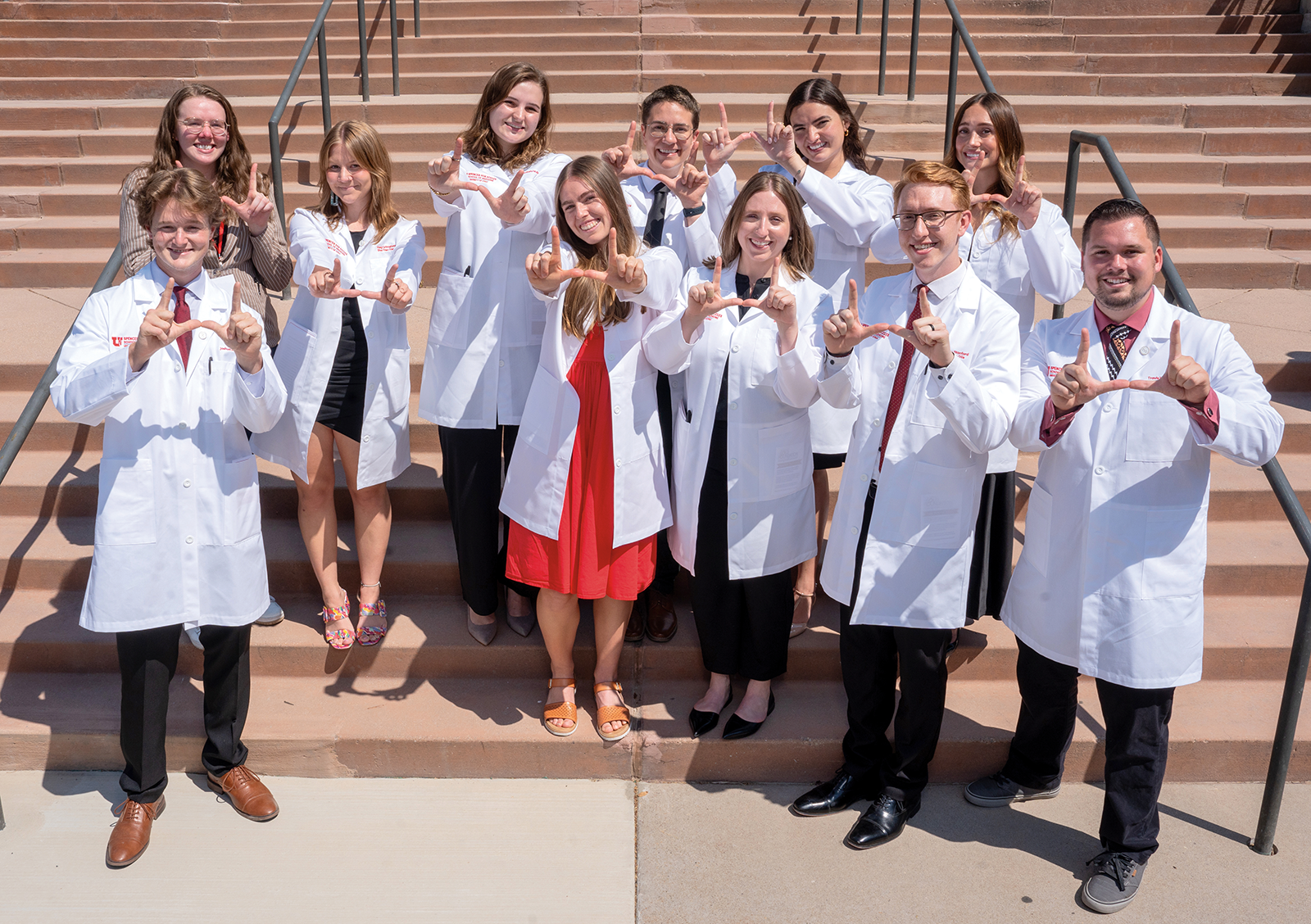
The Southern Utah Regional Medical Campus in St. George, Utah, trains future physicians dedicated to advancing health care in rural Utah.
Exciting relationships with our new Southern Utah Medical Campus will be instrumental in helping medical students start their medical school experience in St. George and hopefully staying and practicing in that area.
We’re also recognizing our role as a resource not just in Utah, but throughout the region. Exciting relationships with our new southern Utah medical campus will be instrumental in helping medical students start their medical school experience in St. George and hopefully staying and practicing in that area. We are also exploring the opportunity to build upon our relationship with the state of Idaho. The notion that the University of Utah is the region’s largest academic medical center is an important one, because our alumni practice all over this region.
FORGING PARTNERSHIPS
I am looking forward to leaning on our alumni a little bit. As we continue to grow as a state and as a medical school, we’ll need our alums to jump in: to be willing to mentor and foster training at the graduate medical education level. I am also looking forward to partnerships with other health care institutions of higher education in Utah and taking a collaborative approach to the task at hand. If there is a way to partner with another health care system, another medical school, another entity that has similar goals of improving access to health care in the state and surrounding region, I’m all for it. I would like to see us continue to push for that, and if that means we can engage our alums in that work, that’d be even more exciting