
Reaching for His Full Potential
Larry Cain, MD ’97, mentors medical students in southern Utah to prepare the next generation of physicians.
By: Maureen Harmon
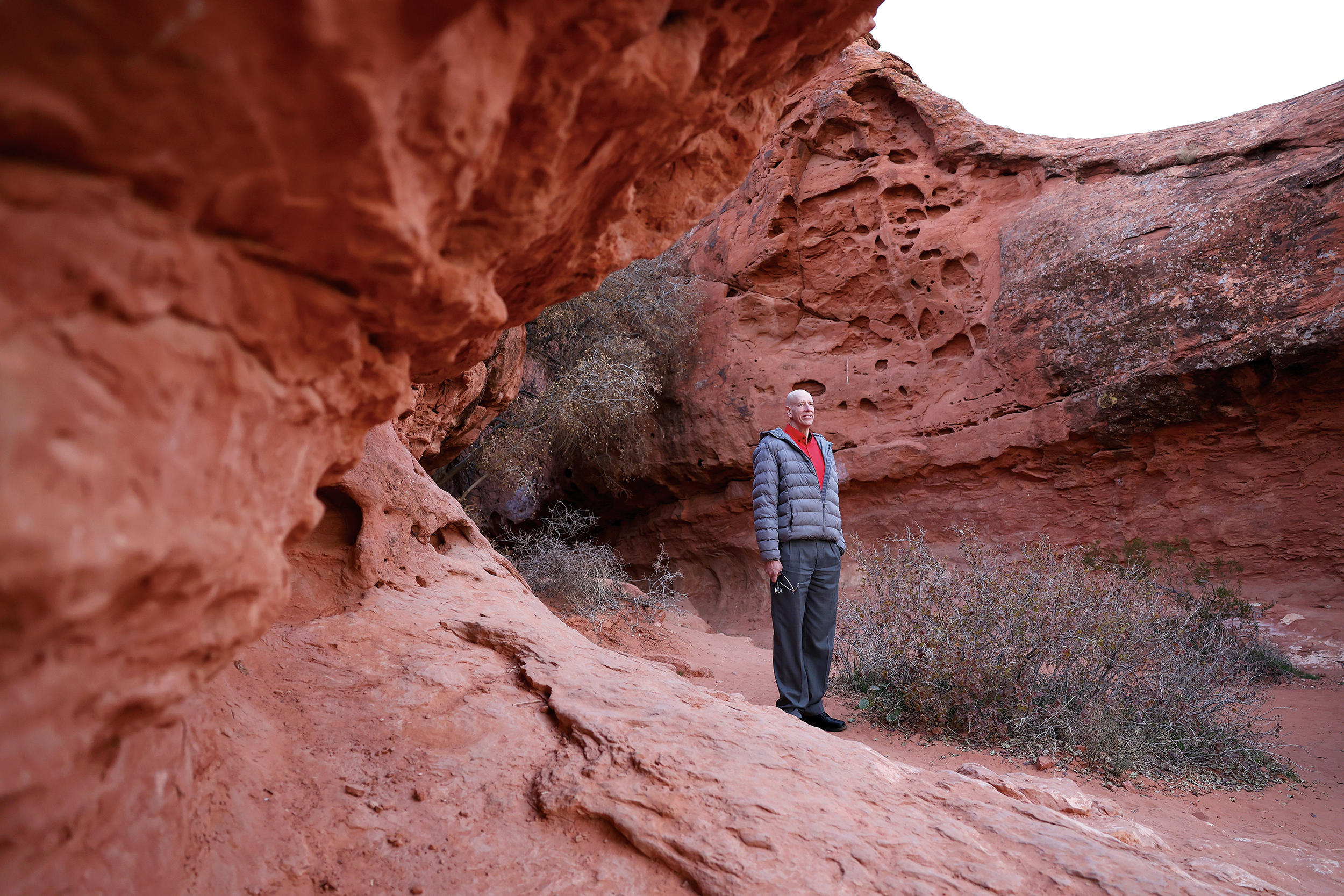
Larry Cain, MD ’97, standing in Pioneer Park in St. George, Utah, serves as a mentor and hub leader for the RUUTE program.
For as long as he can remember, people told Larry Cain, MD ’97, he should be a doctor. “If you’re good at school, that’s just what every-one said,” he recalls. Growing up in Ogden, Utah, as the first in his family to attend college, the path seemed both natural and daunting.
In college at the University of Utah, he considered pharmacy: an efficient way to merge his love of science with a more predictable timeline. But it was his basketball coach, Rick Majerus, who challenged him to think bigger. During a long end-of-season meeting, Majerus urged his player to shadow doctors, pharmacists, and specialists before making the decision—even connecting him with a doctor so he could visit an operating room to see that work in action.
That one visit to the OR changed everything. Standing beside an anesthesiologist during a triple bypass, Cain was hooked. Medicine would demand years of training, but it would also offer the intellectual challenge and human connection he craved.
That balance—challenge and connection—has defined his career. Now practicing in St. George, Utah, Cain has become not just a physician but also a mentor. As a hub leader in the University of Utah’s Rural & Underserved Utah Training Experience (RUUTE) program, he welcomes medical students into his practice.“
They get to be my partner in taking care of my patients,” Cain says. “I let them shadow me for the first four or five patients the first day, and then later in the afternoon, I give them a patient’s chart and say, ‘Here, go see this patient and tell me what you think we ought to do.’ Then they get a chance to visit with the patient, see what they think the problem is, decide how they might address it, and present that to me.”
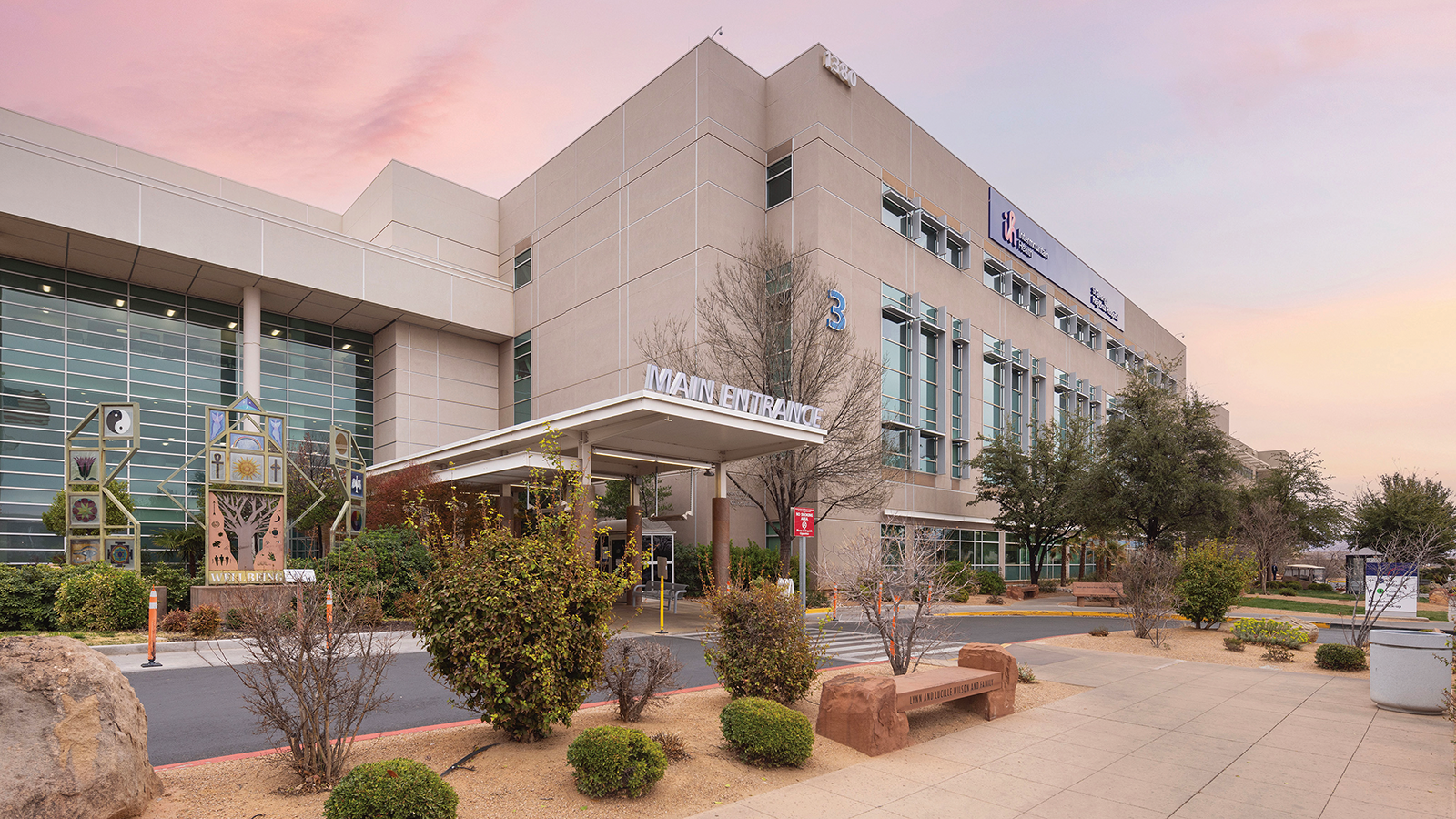
Intermountain Health St. George is a regional hospital where Larry Cain, MD, partners to treat patients.
“I think it’s important that we as physicians have a desire to serve the communities that we live in... these rural communities often have a great need, and that kind of service is really satisfying.”
Cain treasures the dynamic: he’s always had an interest in teaching the next generation of doctors, and the RUUTE program makes that possible. “I have enjoyed having students all of my career,” says Cain. “Having an LIC (longitudinal integrated clerkship) student has been even more enjoyable, as I get to know him or her for a much longer time. Knowing that this student is more likely to pursue a career in rural practice also adds a higher degree of satisfaction to my teaching.” It also allows him to serve in his own backyard: “I think it’s important that we as physicians have a desire to serve the communities that we live in,” he says. “These rural communities often have a great need, and that kind of service is really satisfying.”
The goal for the students is independence and, more importantly, confidence. Just as Majerus once nudged him toward his full potential, Cain now nudges his students toward theirs—especially when it comes to practicing in rural settings. He also looks forward to an upcoming expansion to the St. George area. “I am excited for the expansion of the University of Utah School of Medicine campus into St. George. It will be extremely beneficial to have students see that there is high-quality medical care delivered in rural areas. It can be harder than in a big city,” he admits. “But it’s also more satisfying. You take care of a wide variety of people. You see everything.” For him, that has meant delivering more than 2,000 babies throughout his career.
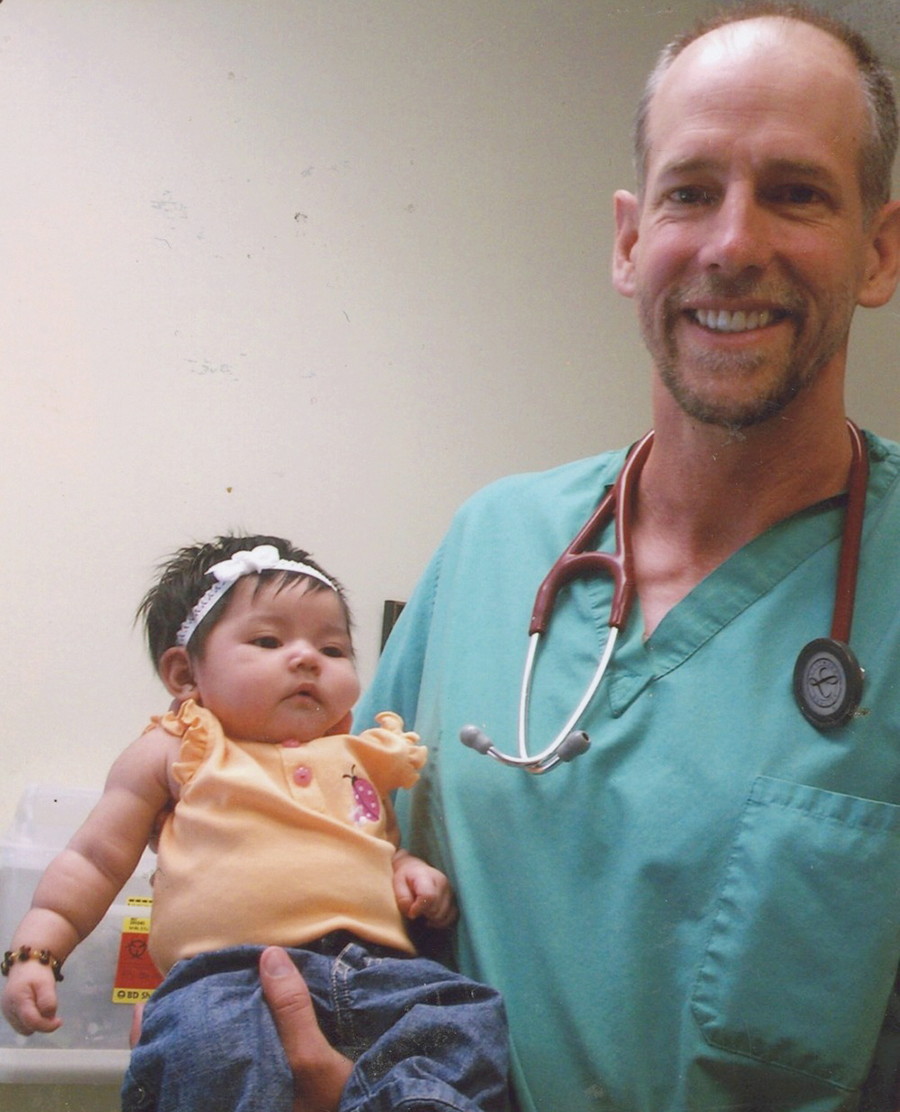
Larry Cain, MD, holds a pediatric patient circa 2019.
Technology has eased some of the burdens of rural medicine: Telehealth means help is only a Zoom call away. Still, Cain is candid about the challenges: long hours, limited resources, the ever-present risk of burnout. But he’s also quick to remind his students of the rewards—rewards he has seen firsthand. “At the end of the day, when a patient says, ‘That doctor really listened,’ that’s what matters.”