
Three Decades of Curiosity and Persistence Turned One Question Into a Breakthrough That Could Change the World.
In the past year, Wesley Sundquist, PhD, has walked red carpets with the likes of Snoop Dogg and Simone Biles as one of TIME’s 100 most influential people in the world.
By: Sophia Friesen
Photos by: Chad Kirkland
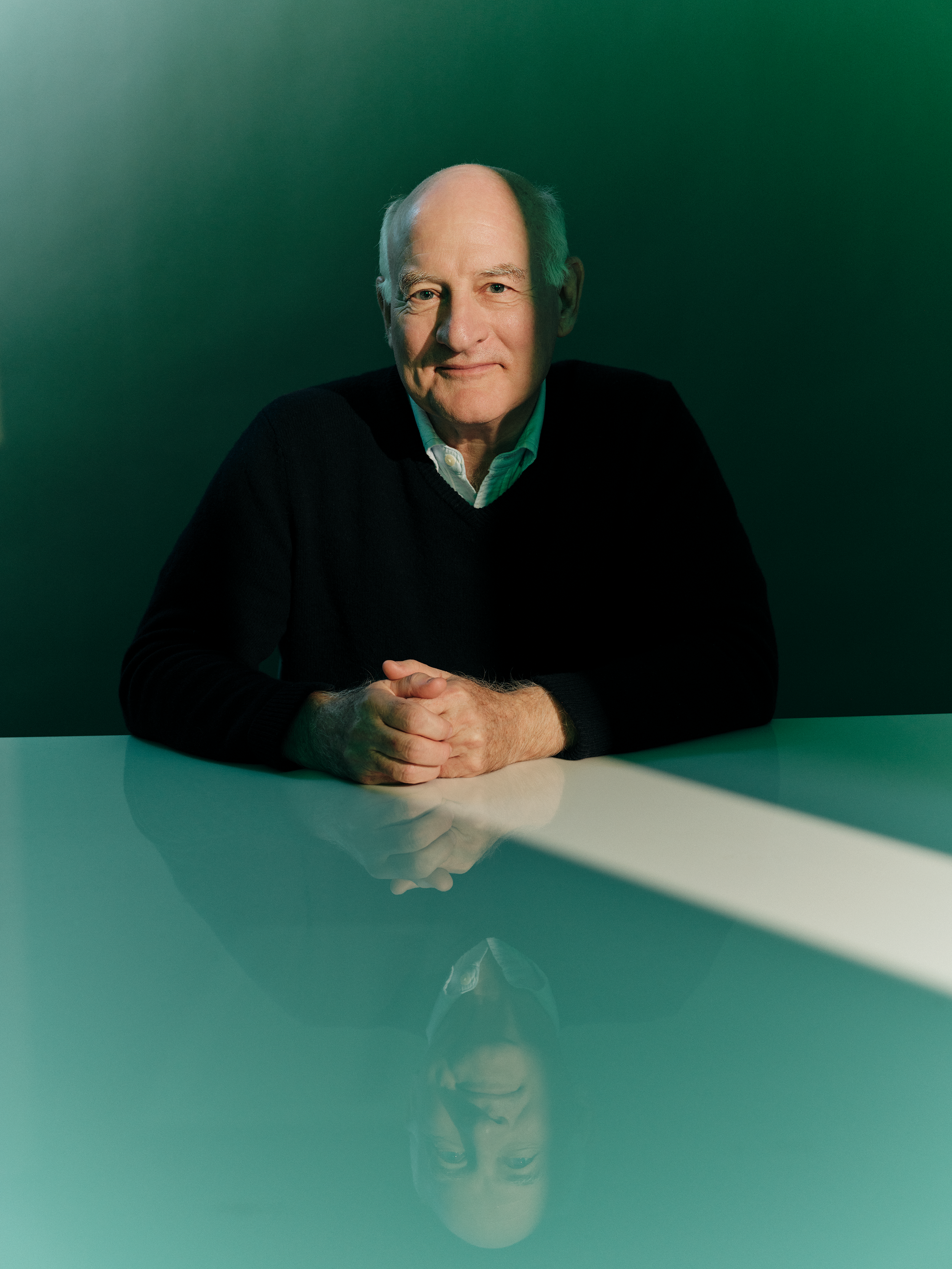
Wesley Sundquist, PhD, has spent 30 years leading research that is now making headlines around the globe for a breakthrough that could change the course of the AIDS epidemic.
In the past year, Wesley Sundquist, PhD,
has walked red carpets with the likes of Snoop Dogg and Simone Biles as one of TIME’s 100 most influential people in the world.
He’s received accolades for his research ranging from Science magazine’s breakthrough of the year to the Horwitz Prize—as of 2024, 51 of the 118 awardees have also received a Nobel Prize—and has become known as one of the key minds that laid the foundation for an HIV prevention drug that could change the course of the AIDS epidemic globally.
But if you ask Sundquist, his work started with something much humbler: the microscopic architecture of a single part of the HIV virus.
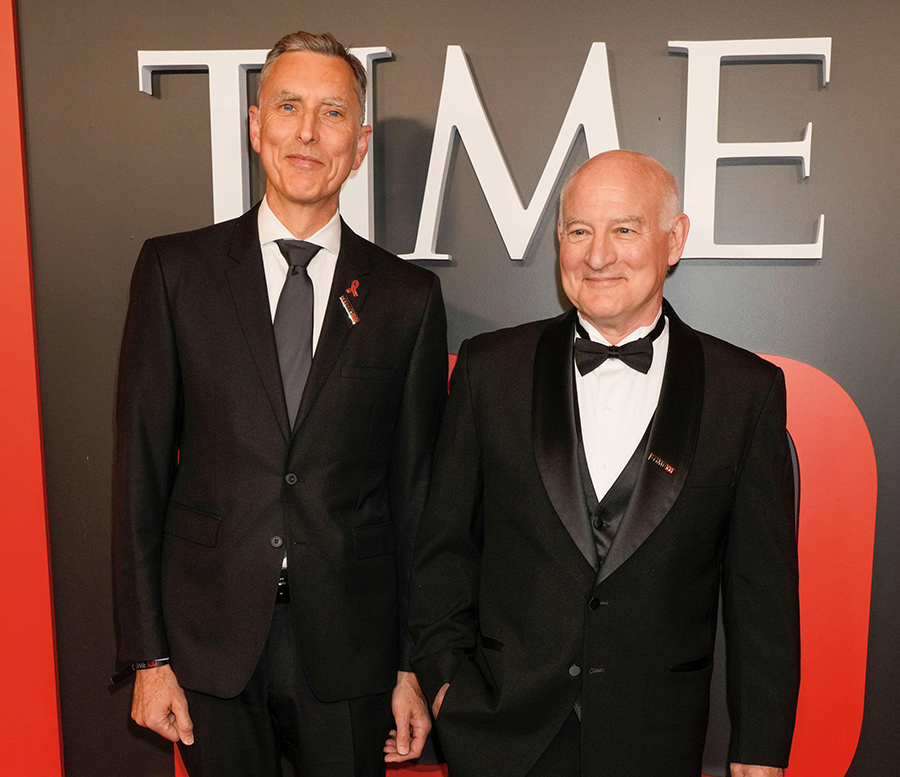
Wesley Sundquist, PhD (right), and Czech biochemist Tomas Cihlar (left) attend the TIME 100 Most Influential People in the World Gala on April 25, 2025.
Sparked by Curiosity
One side of Sundquist’s office is a rainbow panorama of watercolor art, each panel depicting a different phase of the HIV life cycle. The virus can be deadly, its impact on human life inarguably devastating, but in this office, its complexity is inspirational.
“When you see a molecule in action, it’s not so different from seeing a waterfall, in that there’s natural beauty there,” says Sundquist, a Distinguished Professor and department chair of biochemistry and the Dr. Leo T. Samuels and Barbara K. Samuels Presidential Endowed Chair.
For more than three decades since starting his lab, Sundquist has been driven to understand that beauty. “That a virus can complete an entire replication cycle is rather magical,” he says. “We want to understand how this works, not just because it might help medicine, but also because it’s a fascinating and beautiful process.”
Many viruses are simple spheres, but the HIV capsid, the protein shell that surrounds the virus’s genetic material, is a cone—more complicated, and much rarer. “It’s not a typical biological assembly,” Sundquist notes. “We knew it was going to be some unique assembly that wasn’t understood.”
From the start of his quest to understand HIV’s structure, Sundquist found a natural collaborator with fellow biochemist Chris Hill, who also joined the U in 1992. The two immediately clicked. “We challenged each other,” Hill remarks. “We became friends and scientific buddies.”
Sundquist and Hill couldn’t see how a single protein building block could assemble into an asymmetric cone. But Hill, now Distinguished Professor of biochemistry and the Spencer Fox Eccles School of Medicine vice dean for research, had a breakthrough after reading a paper on a carbon compound that can form sheets or spheres, depending on how its subunits link together. He suspected the capsid protein might form a cone via a similar mechanism.
The cone’s mathematical angles confirmed Hill’s suspicions. It was a major advance in understanding how the virus was built, but at the time, it seemed purely academic. “We had this insight, and I thought it was quite beautiful,” Hill recalls, “but it wasn’t clear how it was going to be useful for anything.”
Genetic analysis of the capsid revealed the first hints of translational applications. When the late Uta von Schwedler in Sundquist’s lab made mutations in different parts of the capsid gene, she found that the shell was extremely sensitive to change. Small tweaks to the protein’s code stopped the virus from replicating quickly, leaving it incapable of robust infection.
It raised the question: if a mutation could stop HIV in its tracks, could a drug that targeted the capsid do the same?
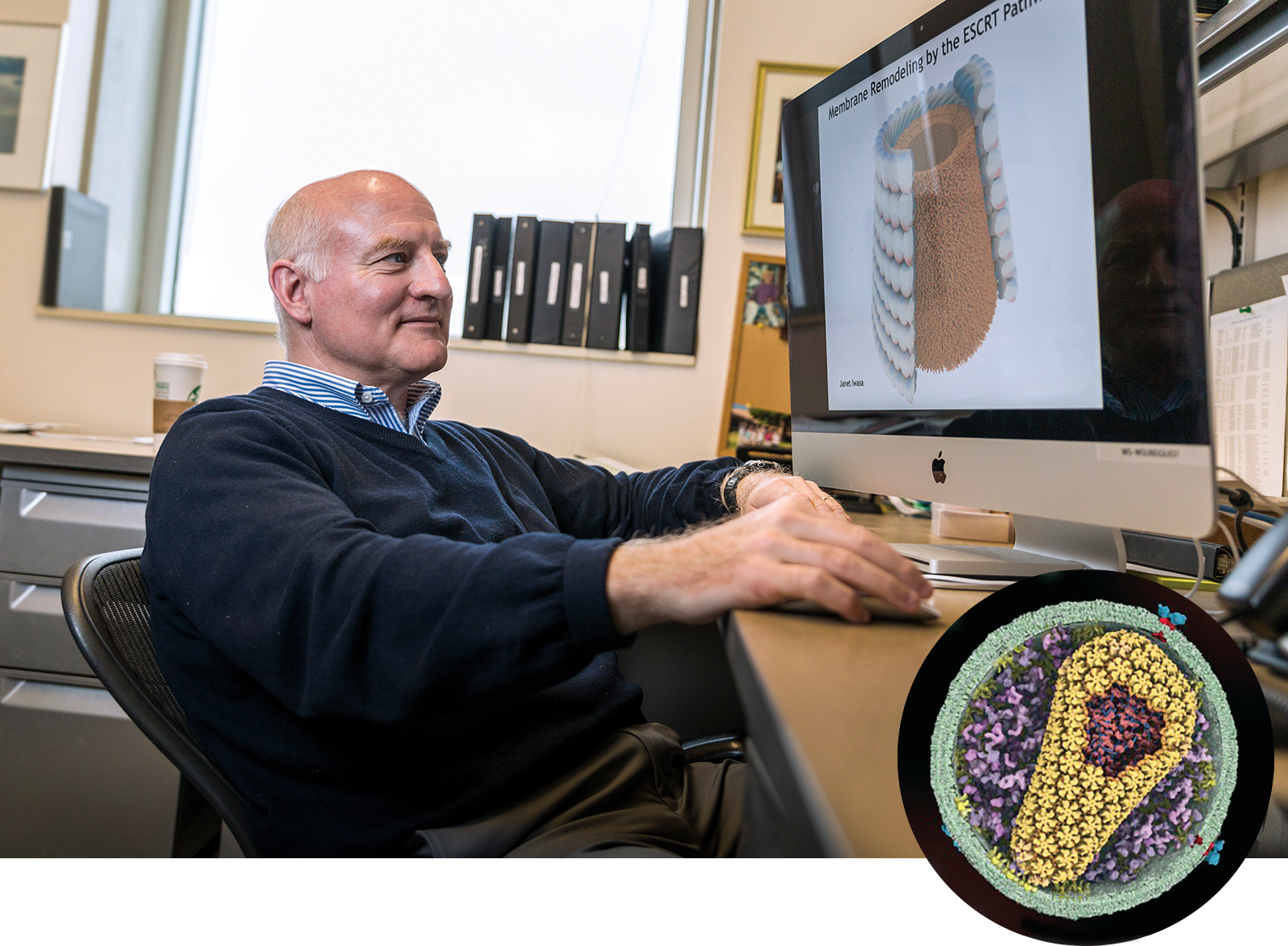
LEFT: Wesley Sundquist, PhD, works at his desk.
Right: A microscopic view of the HIV capsid
From Discovery to Drug
Outside the lab, others took notice. Tomas Cihlar, then principal scientist at pharmaceutical company Gilead Sciences, came across von Schwedler’s results and was struck by how critical the capsid seemed for viral function. He started investigating the capsid further. “Wes’s name was on most papers related to the HIV capsid,” he recalls.
In late 2005, the two met for the first time to discuss the capsid’s potential as a new drug target. “I was not sure how it would go, because Wes was already prominent in the HIV field and a very well recognized biochemist. But it turned out that he’s a really nice guy,” says Cihlar, now senior vice president of virology research at Gilead. That conversation launched a decades-long scientific partnership, with Sundquist acting as a basic science consultant on the structure of the capsid, while Gilead worked to design a drug.
Academic labs like Sundquist’s are critical to drug development, Cihlar says. “Without investing in basic research, we in industry would not have the foundational information about biological functions and systems.”
Even with that foundation, developing a capsid-targeting drug wasn’t easy. Unlike for more conventional targets, no known compounds interacted with the capsid, and there was no roadmap to find them. The screening process demanded 50 grams of capsid protein—the equivalent of 400 million billion viral particles. And after four years, the initial screen failed. “We had to make our decision,” Cihlar reflects: “Are we going to walk away, or are we going to keep trying?”
They Kept Trying.
Starting from a new molecule that interacted very weakly with the capsid and was very unstable, Gilead researchers spent six years painstakingly synthesizing new molecules, making improvements over the course of more than 4,000 compounds made and tested individually. Finally, they arrived at a compound that bound the capsid protein and interfered sufficiently with viral replication. In addition, it was also incredibly stable, affording long dosing intervals.
In cells in a dish, in animal models, in pilot studies, the compound’s efficacy exceeded expectations. “There were multiple moments when I felt like: this is working better than we could ever imagine,” Cihlar recalls.
The Trials
HIV infects 1.3 million people every year. Despite treatment advances turning HIV infection from a death sentence into a largely manageable chronic condition for those with access to high-quality health care, over 600,000 people die from HIV/AIDS worldwide every year, many in southern and eastern Africa, where stigma and reduced access to health care can limit treatment options.
So that’s where lenacapavir was tested. The first large clinical trial recruited over 2,000 women in Uganda and South Africa, among the countries with the highest rates of HIV infection and death. Advocates like Yvette Raphael, co-founder and executive director of Advocacy for Prevention of HIV in Africa, were key to the study’s success. As chair of the advisory board, Raphael helped ensure that the most affected populations—young women, including those pregnant and breastfeeding—would be a focus.
Women came into the clinic for an injection every six months, and by the end of a year, not one of the trial participants had contracted HIV.
Follow-up trials in other populations, including men and nonbinary people, confirmed the drug’s efficacy. “Lenacapavir almost completely prevents the transmission of HIV into at-risk populations,” Sundquist says. “This is just an amazing result.” In June 2025, lenacapavir received FDA approval for HIV prevention.
“It’s one of those things that we’ve waited for,” Raphael says. “To get an injection twice a year that prevents you from contracting HIV, in places where HIV prevalence amongst young people is still so very high—it’s groundbreaking, and it’s almost likened to a miracle.”
The remarkable impact of the drug depends not only on how strongly it inhibits the virus, but also on how long it lasts. In regions where taking a daily pill might be difficult, a twice-a-year preventive injection could make a huge difference.
Future work must prioritize disseminating information on lenacapavir, as well as the drug itself, to help at-risk communities make informed choices, Raphael says. But she’s hopeful that lenacapavir could dramatically change the course of, and eventually end, the HIV epidemic. “We’d like to see the rate of new infections drop to almost zero. And lenacapavir has shown that it has the possibility of getting us there much quicker.”
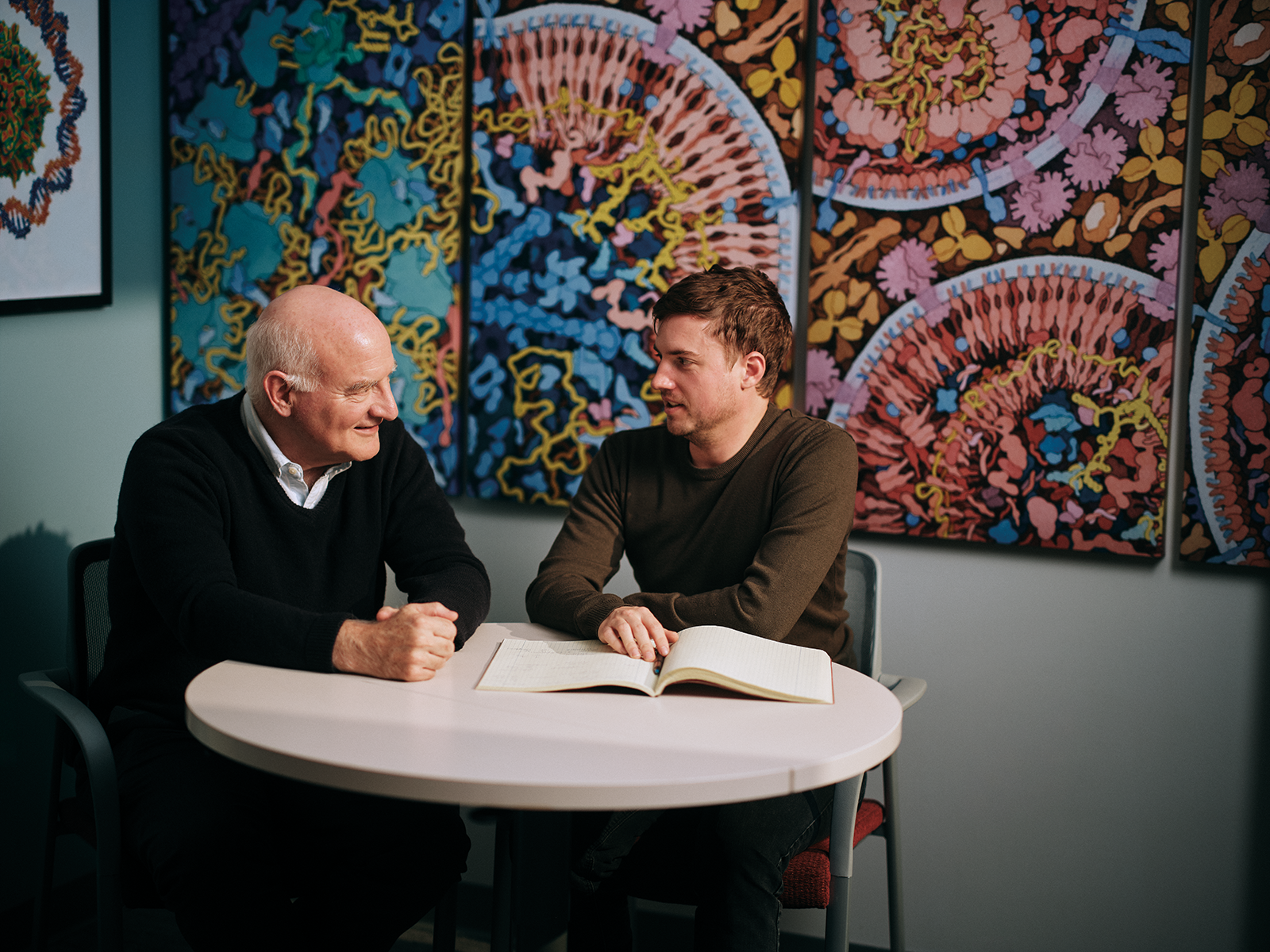
Wesley Sundquist, PhD, mentors doctoral student Ben Schmitz.
The Final Hurdle
You never know where basic research will lead, Sundquist muses. A question founded in curiosity about the natural world can lead to a breakthrough that could change the trajectory of infections worldwide.
But Sundquist says the future of lenacapavir is still up in the air. After three decades of basic science, industry collaboration, and clinical trials, changes to federal funding priorities mean that the programs that would have helped pay for the distribution of the drug to those who need it most are now in question. It’s uncertain how lenacapavir will make it past this final implementation step.
“The potential for treating or preventing infections relatively cheaply is there,” Sundquist emphasizes. “It would be a human tragedy if we don’t roll it out.”
A Future of Collaboration
Meanwhile, Sundquist continues to uncover basic biology and expand new networks of scientific collaboration.
Since 2007, Sundquist has run CHEETAH, an NIH-funded program that connects HIV-focused labs at the U and nationwide to build the foundations for further breakthroughs in HIV treatment and prevention. The 20-lab coalition helps researchers build partnerships and tackle broader challenges.
As lenacapavir rolls out, the Sundquist lab’s more recent discoveries are setting the stage for future medicines. Sundquist and his “science buddy” Hill are uncovering features of the ESCRT pathway, a fundamental process that helps sort molecules inside cells, that suggest targets for broad-acting anticancer therapies.
In other cases, their work has revealed the intricate beauty of natural processes, with the translational impact unknown… for now. “We don’t know what we don’t know,” Hill underscores, “but we do know there’s a lot of it. Even if you don’t quite know how it might become useful, you’ve got to find it out, because some of it will be transformative.”
“We’re driven by curiosity to discover things that we don’t understand,” Sundquist adds. “It’s not so different from other kinds of adventures. The same thing that drives people to climb mountains drives us to discover how molecular machines work.”
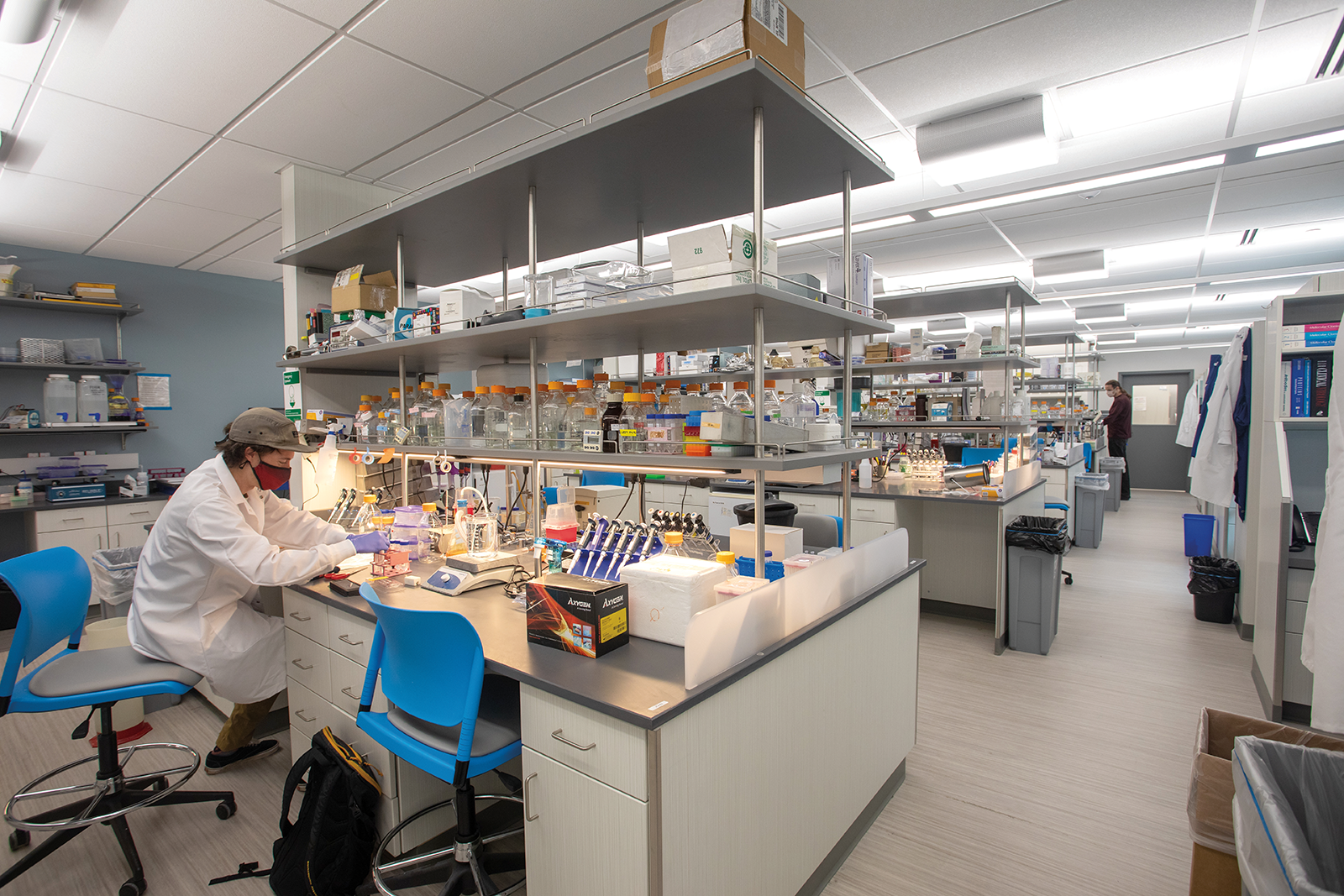
In the Sundquist Lab
Sundquist is known around the world for his pioneering work on viruses, but for those who trained in his lab, his most lasting influence is as a teacher. As a Distinguished Professor and department chair of biochemistry at the Spencer Fox Eccles School of Medicine, he has guided students and postdoctoral fellows who now lead labs, have mentees of their own, and push discovery in new directions. Three researchers at different stages of their careers share what it’s like to learn from Wes Sundquist.
By: Edward Weinman
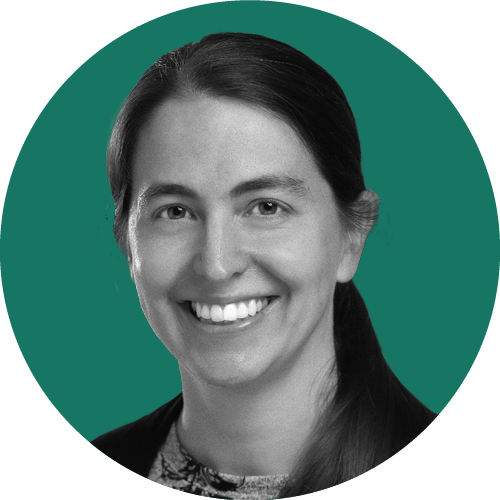
Dawn Wenzel, PhD
For Dawn Wenzel, PhD, now leading her own lab at the Medical College of Wisconsin, the most profound lesson from her nine years of postdoctoral training with Sundquist wasn’t about how to collect facts: it was about how to think.
“Wes would always emphasize that our research should strive to establish principles for how biology works instead of collecting facts,” recalls Wenzel, whose research focuses on the “abscission checkpoint,” a quality-control mechanism that arrests cell division to prevent catastrophic errors that can lead to cancer. “I think about this a lot as I develop our lab’s research program and mentor trainees.”
This principle-driven approach was the cornerstone of her experience in the Sundquist lab. Wenzel describes Sundquist as an incredibly dedicated scientist who pushes his team to think deeply and perform the best experiment to answer a question. His common refrain at the end of meetings, “Let’s get it right,” instilled a commitment to rigor that she carries with her today.
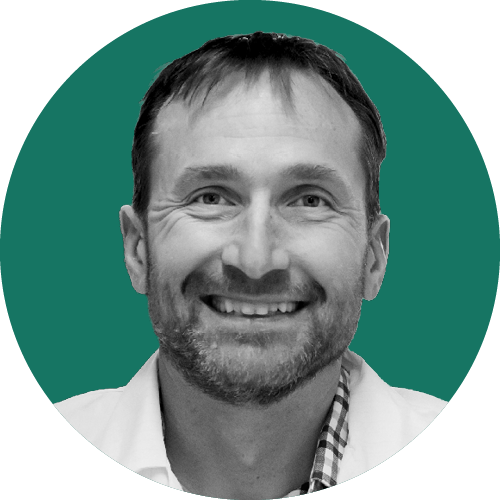
Chaz Langelier, MD ’11, PhD ’11
When Chaz Langelier, MD ’11, PhD ’11, established his lab in the Division of Infectious Diseases at the University of California, San Francisco, he carried forward what he calls Sundquist’s most important lesson: do it right, even when it’s hard.
“Wes has exacting standards,” Langelier says. “Repeating experiments was common practice in his lab to ensure that data were as close to the truth as you could get. This instilled in me a foundational commitment to scientific integrity and rigor.”
Langelier’s research now comprises three central areas: developing novel molecular diagnostics for infectious diseases, studying the host/pathogen biology of pneumonia and sepsis, and advancing methods for the surveillance of emerging infections. But the foundation was laid years earlier in the Sundquist lab, where as an MD and PhD student, he contributed to basic science research on HIV replication and capsid stability.
“I was so happy for him; it’s incredibly well-deserved,” Langelier says of Sundquist’s TIME 100 recognition. “With so many negative and unfair things often happening in the world, it was wonderful to see something good happen. I can’t think of that award going to someone more deserving, who better represents what a scientist and professor should be.”

Ben Schmitz, PhD Student
Biochemistry PhD candidate Ben Schmitz says that Sundquist’s dedication to science and work ethic is “truly contagious.”
“It is both humbling and inspiring,” says Schmitz, who began conducting research in the Sundquist lab as a graduate student in 2018. “I believe his high standards will continue to shape and propel us throughout our careers.”
He explains that the lab environment motivates scientists to push themselves further and raise their own expectations for what can be achieved. In the Sundquist lab there is a shared purpose, which is central to the lab’s culture.
Schmitz’s own research centers on the adeno-associated virus (AAV), where he’s exploring how the virus escapes the cell—a question that challenges the assumption about how non-enveloped viruses are released. His research suggests that AAV may actively hijack the cell’s machinery to escape in novel ways.
That drive to question assumptions mirrors the curiosity and perseverance he sees in Sundquist. “Wes is in his office nearly every single weekend, and he gets there hours before I do,” Schmitz says. “He’s one of the most driven people I’ve ever met, and for many of us in the lab, that drive inspires us to continue pushing and bettering ourselves as scientists.”